Engineering Team & Disciplines
The chassis we weld, the cabins we shape, the electrical systems we integrate and the test rigs we run all sit inside six engineering disciplines staffed in-house. Each discipline supports practical vehicle and parts work, from configuration review to production follow-through.
Engineering Philosophy
How We Decide What’s Worth Owning In-House
Own the Failure Path
If a component is on the critical-failure path (chassis structure, brakes, drivetrain integration, battery thermal management), we engineer it in-house. We don’t want to ask a supplier why a unit failed in the field — we want to own the answer.
Test Before You Trust
Every design change runs through bench / track / endurance testing before it ships in volume. The failure-cases page documents what that catches. The point is to find the problem in-house, not in the operator’s daily route.
Patent What You Iterate On
The 40+ patents we hold protect the iterations that took the most engineering hours to land — chassis geometry refinements, cabin structure innovations, electrical integration improvements. Patents are not vanity; they are documentation that we’ve actually solved the problem.
Engineering Ownership
Teams Behind Parts, Vehicles and Export Orders
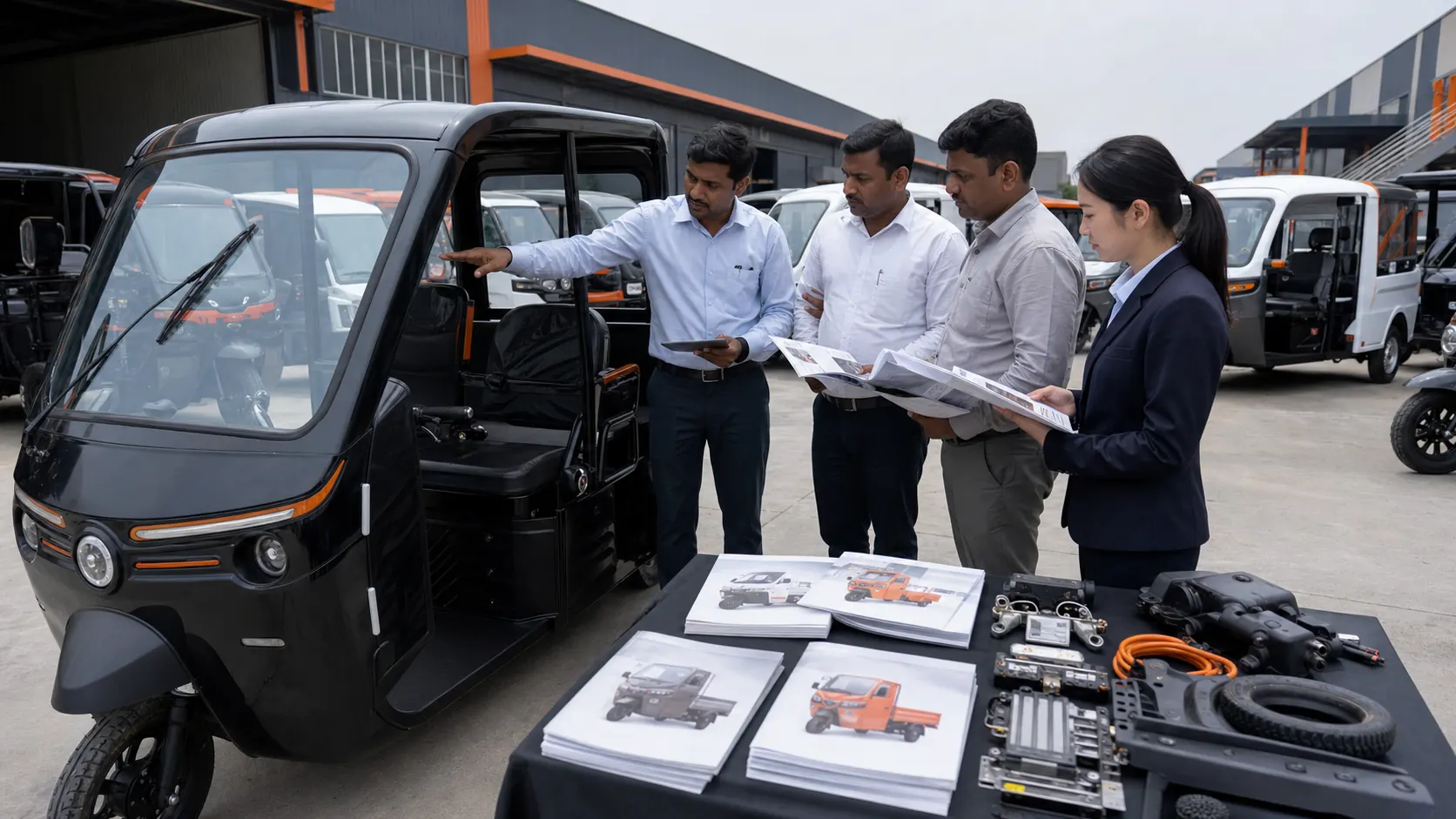
Engineering Review
Fitment & Configuration
Reviews vehicle type, load use, mounting data and parts compatibility before quotation or production planning.
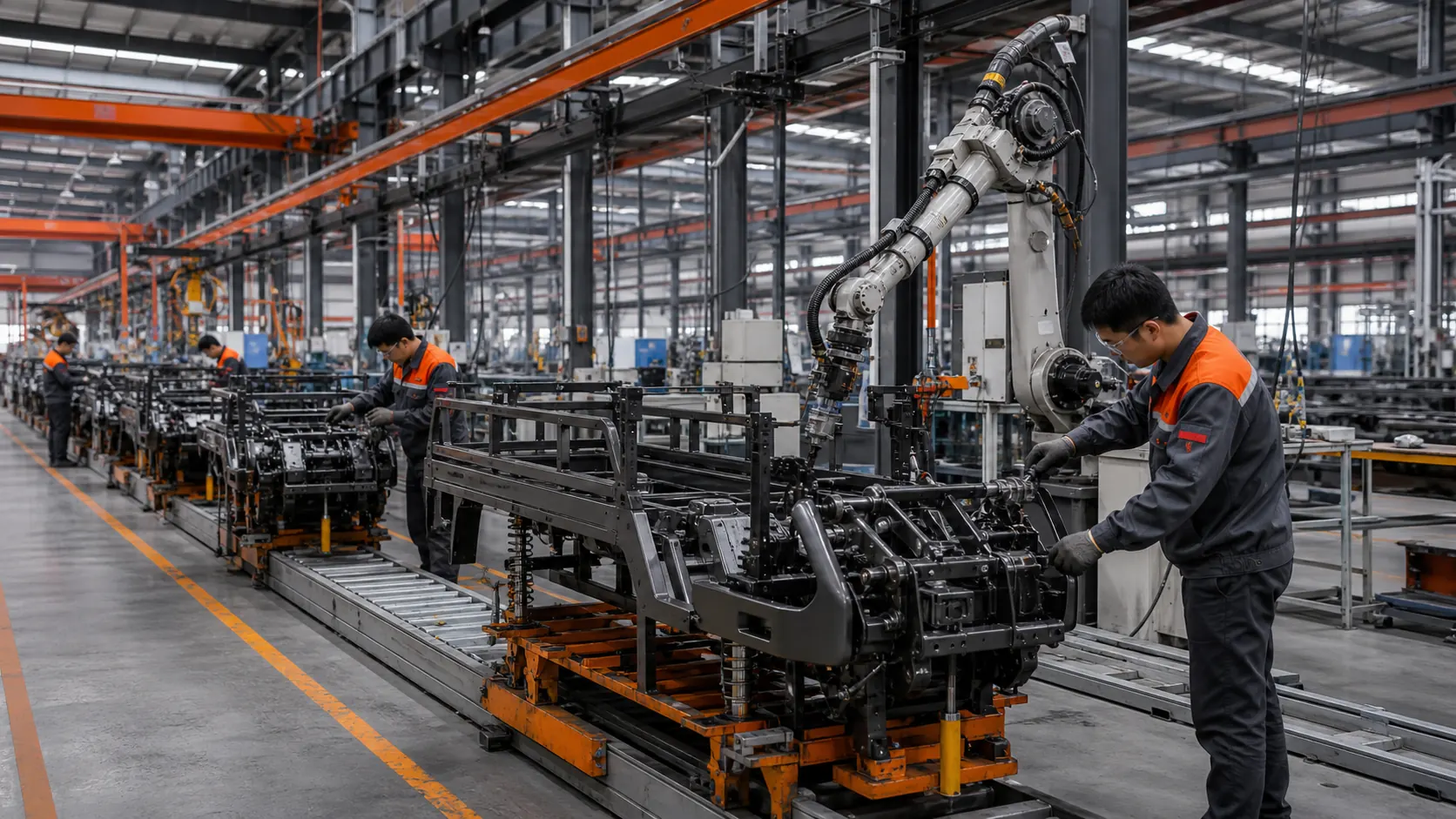
R&D Support
Parts & Vehicle Development
Connects rear axle systems, electrical matching, body configuration and OEM requests with production-ready solutions.
Quality Control
Inspection & Testing
Manages incoming checks, production gates, finished-product inspection and corrective action records.
Production & Export
Packing, Documents & Delivery
Coordinates production planning, parts packing, export documents and shipment preparation for repeat buyers.
By Discipline
Six Engineering Disciplines, Each With Defined Ownership
The engineering organization is structured around the physical and functional zones that decide whether a vehicle holds up in the field. Each discipline owns a defined scope, runs its own bench and test process, and contributes to the joint design reviews that lock each model’s configuration.
Chassis & Frame Engineering
In-houseOne-piece stamped frame design, weld geometry, suspension pickup points, structural reinforcement under load — the structural backbone every other system mounts to.
Owns: chassis CAD, weld fixture design, structural FEA, payload-rated reinforcement, fatigue testing.
Drivetrain & Battery
In-houseMotor sizing, controller specification, battery pack integration, charging system design, thermal management across lead-acid and lithium configurations.
Owns: motor / controller selection, battery pack BOM, charging curve tuning, thermal envelope testing.
Cabin & Body
In-houseCabin form (open semi-closed, semi-closed, long-body, fully enclosed), passenger ergonomics, cargo body / van box design, weatherproofing for export-market climates.
Owns: cabin CAD, sheet-metal tooling, weatherproofing specifications, paint and coating standards.
Electrical & Control Systems
In-houseWiring harness design, lighting and signal systems, dashboard instrumentation, reverse camera integration, remote monitoring on refrigerated configurations.
Owns: wiring schematics, harness manufacturing specifications, lighting / signal compliance, control firmware where applicable.
Quality & Testing
In-houseIn-line process control, finished-product test set (load, brake, road, electrical safety), test-track endurance program, the documented failure-cases discipline.
Owns: incoming inspection, in-process gates, finished-product test rigs, calibration and traceability, failure-case documentation.
Production Engineering & Export
In-houseProduction line layout and balance, CKD / SKD packaging engineering, container loading specifications, export documentation pack assembly for destination-market compliance.
Owns: line capacity planning, CKD/SKD packaging design, container loading layouts, export documentation templates by destination market.
Engineering Process
From Concept to Production Handoff
A new model or a major design change runs through the same five-stage process. The point is to lock the design before tooling, and to have testing data on the table when production engineering takes over.
Concept & Requirements
Buyer route / duty cycle / configuration brief becomes engineering requirements; chassis, drivetrain and cabin discipline leads sign off scope before CAD opens.
CAD & Prototype
Discipline-owned CAD work; first prototype built in our own bench for compatibility, geometry and ergonomic verification.
Bench & Track Testing
Component-level bench tests + vehicle-level factory test track + endurance runs. Failures documented; design iterations land here, not in volume production.
Production Handoff
Locked design transferred to production engineering with full test data, fixture specifications and quality-gate criteria. No scope creep after handoff.
Field Feedback Loop
Field reports, self-funded test shipments and distributor feedback flow back to the originating discipline. Lessons land in the next design iteration, not the next sales pitch.
In-House vs Source
What We Engineer Ourselves vs What We Source
Engineered In-House
- Chassis geometry and one-piece stamped frame design
- Cabin form and cargo / van body engineering
- Suspension, braking and steering integration
- Electrical harness and dashboard layout
- Battery pack thermal envelope and configuration
- Production-line layout and balance
- CKD / SKD packaging engineering
- Quality test rig design and the failure-cases program
Sourced from Approved Suppliers
- Motors and controllers (to our specification)
- Battery cells and BMS modules
- Tires, lighting components, instrumentation
- Refrigeration unit on logistics configurations
- Hydraulic components on tipper configurations
- Standardized hardware (fasteners, bearings, seals)
Patent Portfolio
40+ Active Patents — Grouped by Engineering Area
The active patent portfolio reflects where our engineering hours have actually landed. Categories below name the engineering areas covered; specific patent numbers and grant dates are documented internally and referenced per order or per technical discussion.
Chassis Geometry
One-piece stamped frame design, suspension pickup point geometry, load distribution refinements.
Cabin Structure
Cabin form transitions (open / semi-closed / enclosed), weatherproofing approaches, occupant safety geometry.
Electrical Integration
Harness routing, dashboard integration, lighting and signal configuration approaches.
Cargo & Van Body
Open-bed flatbed reinforcement, removable side-panel mechanisms, van-box weatherproofing, refrigeration unit integration.
Specific patent numbers and grant dates are available on request to qualified distributor or OEM partners as part of the distributor program due-diligence pack. We don’t publish individual patent numbers on the public site to avoid them being conflated as marketing claims.
Have a Technical Conversation?
For OEM, configuration or custom-build discussions, the export team will route to the right discipline lead — or arrange a direct call with R&D when the question warrants it.