Jangid E Rickshaw Company Selection Guide | Xuzhou LVHANG Vehicle Industry Co., Ltd.
Questions to ask a Jangid e-rickshaw company or similar supplier
An e-rickshaw purchase starts with the route: passenger transport, school pickup, market delivery or short-distance goods movement. If you are searching for a Jangid e-rickshaw company or comparing similar suppliers, the important decision is not the name alone; it is whether the vehicle configuration matches daily load, road condition, charging routine and after-sales support.
Xuzhou LVHANG Vehicle Industry Co., Ltd. can be approached as a supplier to discuss e-rickshaw vehicles or related electric three-wheeler parts, but the exact model range, component options and export terms should be confirmed for your market before you compare offers.
Choosing an electric rickshaw or parts package for real operating conditions
The useful distinction is between buying a finished e-rickshaw and sourcing key assemblies such as rear axle systems, controllers, motors, batteries, body frames or other replacement parts. A finished vehicle decision depends on seating layout, payload, comfort, charging time and local service access. A parts decision depends more on compatibility, mounting dimensions, wiring, brake type and replacement availability.
For a transport operator, a low purchase price can become expensive if the vehicle struggles on slopes, uses hard-to-source parts or has weak local support. For a dealer or assembler, the bigger risk is ordering components that look similar but do not fit the frame, axle, controller or battery system already in use.
Start with the duty cycle. A passenger e-rickshaw that runs fixed urban routes needs stable seating, predictable range and easy maintenance. A cargo e-rickshaw needs stronger load support, suitable rear axle selection and a body layout that matches the goods being carried. Do not choose only by passenger count or cargo box size; road surface, stop-start frequency and daily operating hours change the right specification.
Check the power system as a matched set. Battery type, motor, controller, charger and wiring should be selected together, not as separate bargain items. A mismatch can reduce range, cause overheating or make repairs harder. Ask how the proposed system handles your expected load, terrain and charging schedule.
Look closely at parts availability. Common wear items such as brakes, tyres, bearings, suspension parts and electrical connectors should be easy to identify and replace. If you are comparing a Jangid e-rickshaw company with another supplier, ask whether parts are standard, model-specific or custom-made, because that affects downtime after the sale.
The next step is to share the vehicle use case, target market and any required configuration. For replacement parts, provide photos, existing part dimensions, voltage system, axle type and mounting details. For complete vehicles, describe passenger or cargo use, expected load, road condition and preferred battery arrangement.
| Criteria | Importance | Description | Example Options |
|---|---|---|---|
| Complete e-rickshaw versus parts package | This determines whether you are buying a ready-to-operate vehicle or solving an assembly, repair or fleet-standardisation need. | A complete vehicle should be assessed as a matched system. A parts package requires closer checks of frame, axle, motor, controller, battery, charger and wiring compatibility. | A route operator may compare a finished passenger vehicle, while a repair business may need only a compatible rear axle and related components. |
| Passenger or cargo configuration | The body layout and load support must reflect how the vehicle will be used every day. | Passenger transport prioritises seating, access and comfort. Cargo work places more emphasis on platform layout, load distribution, frame suitability and axle selection. | A fixed urban passenger route and a market-delivery vehicle may need different body arrangements even if both use three wheels. |
| Battery, motor and controller matching | A matched power system affects usable range, serviceability and the risk of compatibility problems. | Assess the battery, motor, controller, charger and wiring together. Consider daily distance, payload, slopes, stop-start frequency and charging routine rather than one component in isolation. | A vehicle used on hilly routes with frequent stops may need a different system discussion from one used for short, lightly loaded trips. |
| Axle, brake and frame compatibility | Mechanical fit and safe operation depend on the relationship between these assemblies. | For a replacement or assembly project, confirm mounting dimensions, axle type, brake arrangement, frame interfaces and the required load duty before ordering. | Two rear axles can look similar while differing in mounting points, brake components or compatibility with the existing drivetrain. |
| Parts identification and after-sales support | Easy identification of wear items can reduce avoidable downtime for operators and dealers. | Check how brakes, tyres, bearings, suspension parts, connectors and electrical components are documented and replaced. Confirm which items are standard, model-specific or custom-made. | A fleet buyer may prefer one repeatable configuration with clearly identified service parts over several vehicles that require different maintenance procedures. |
Product Selection
Related Options
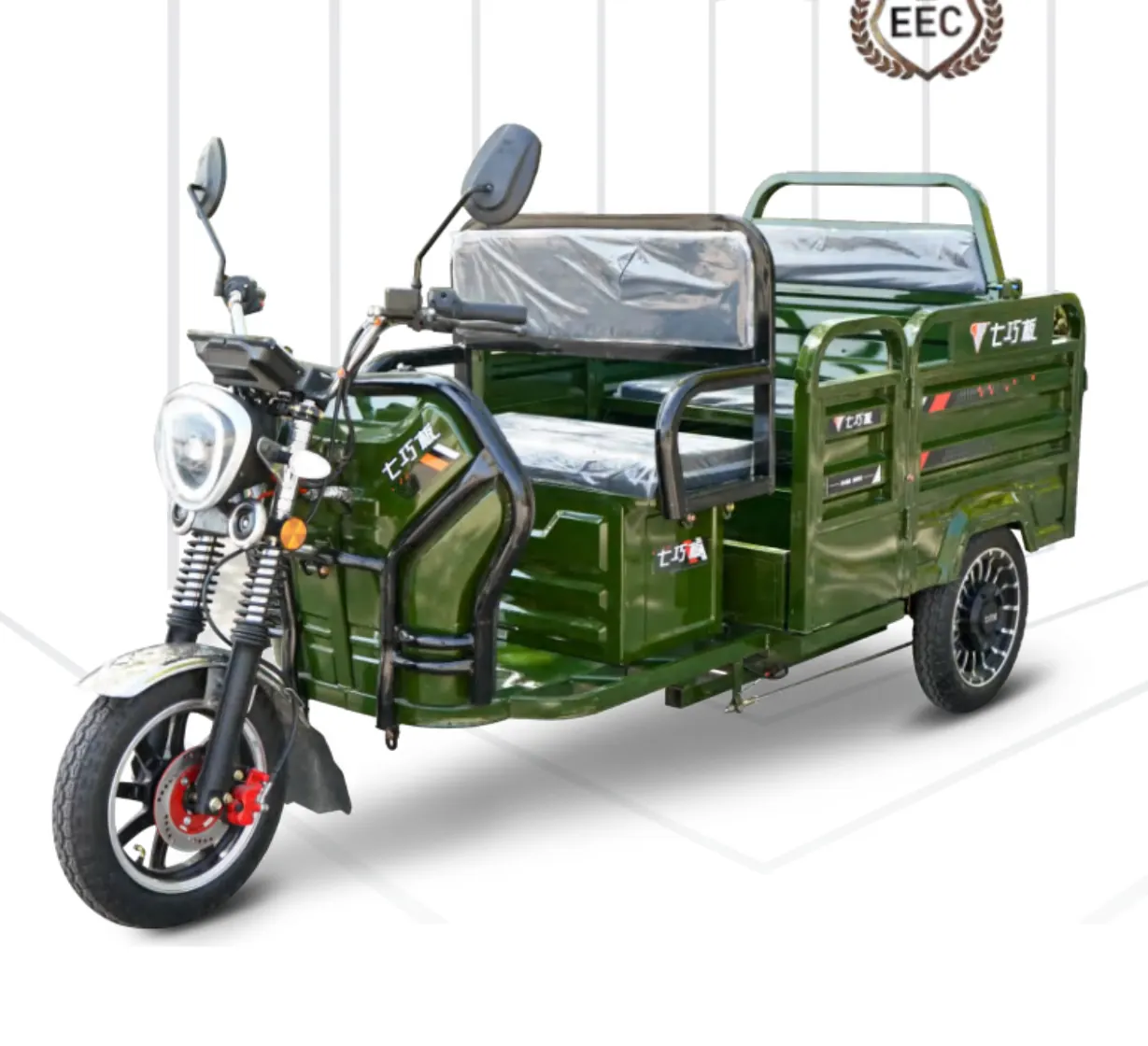
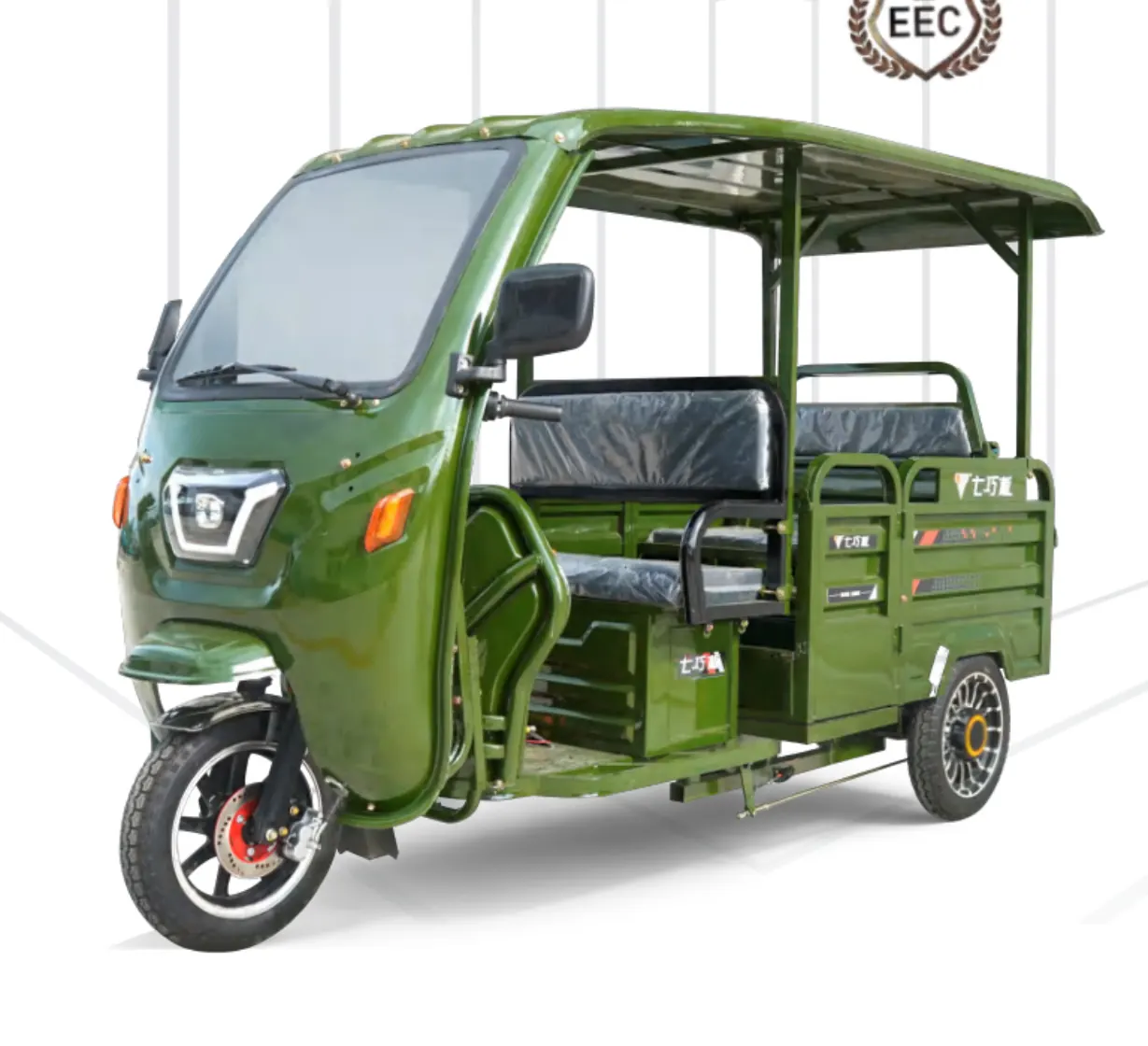
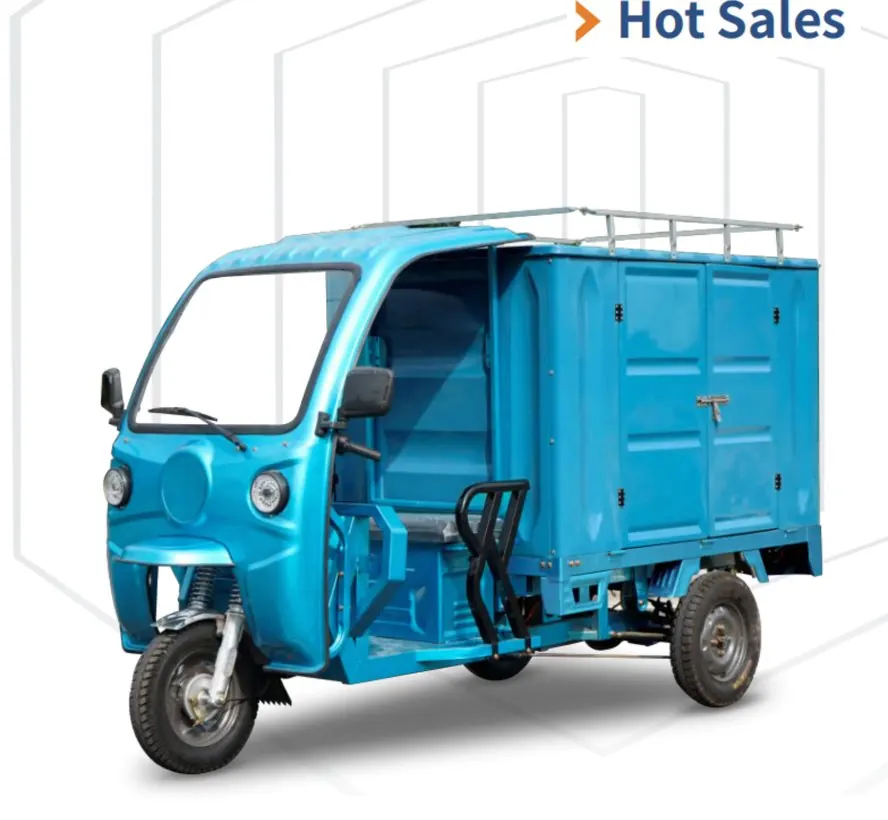
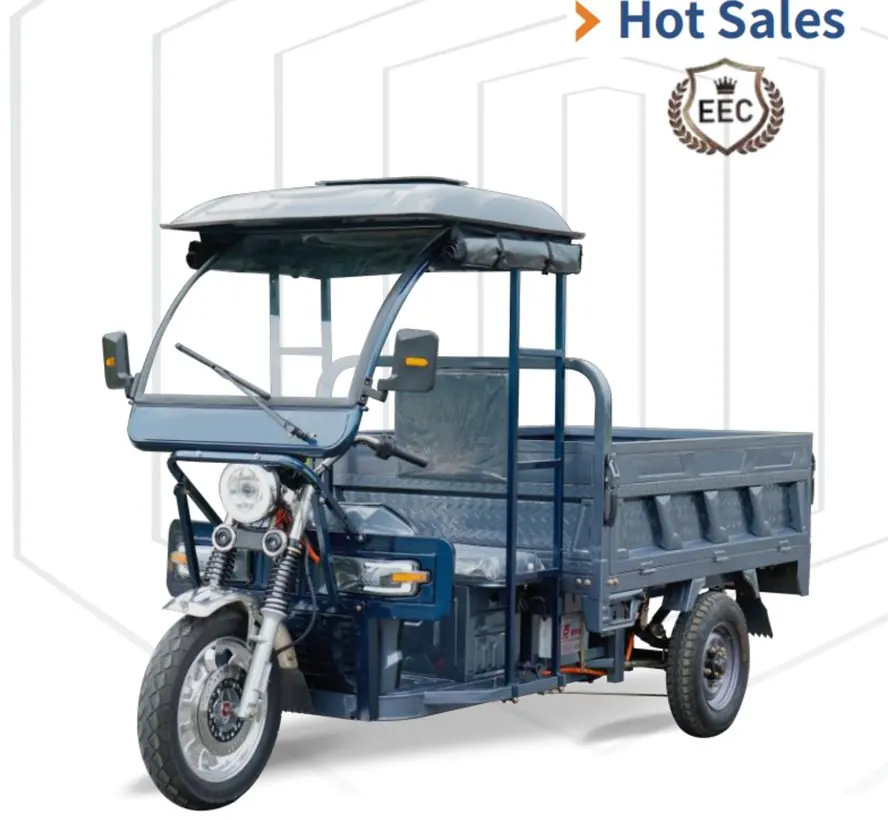
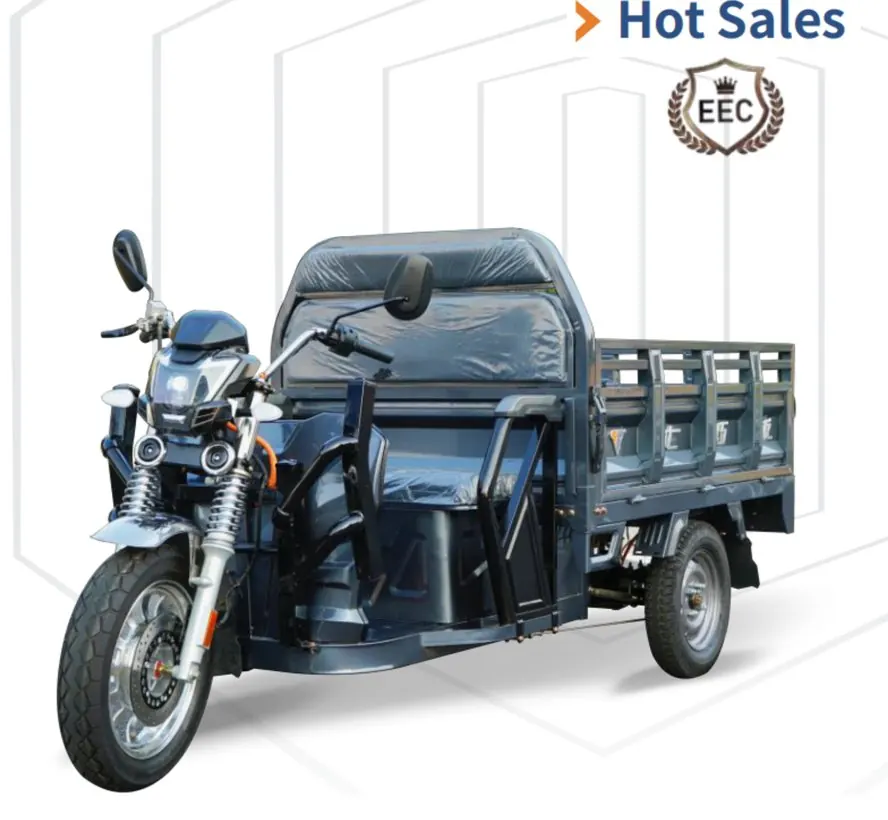
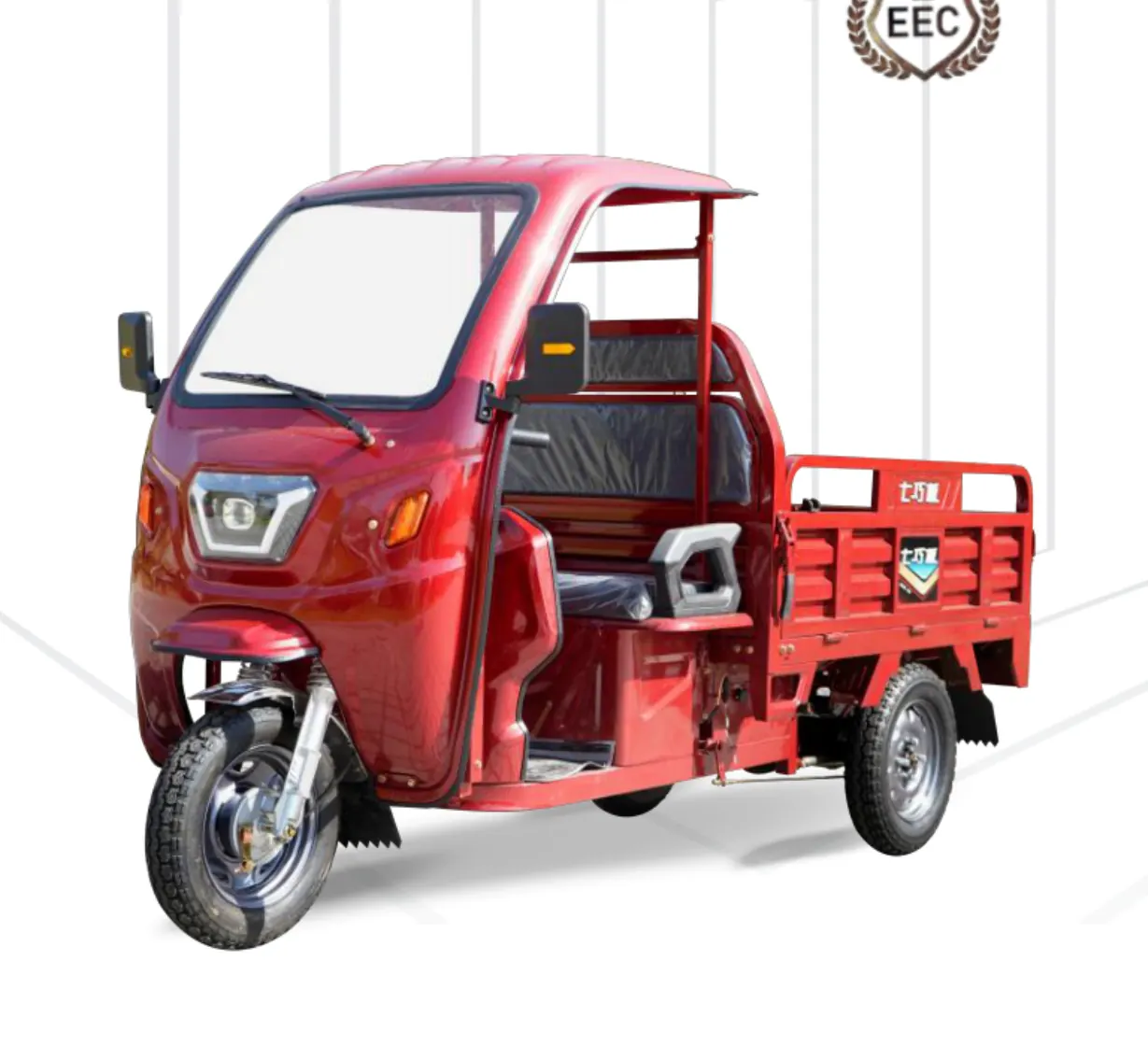
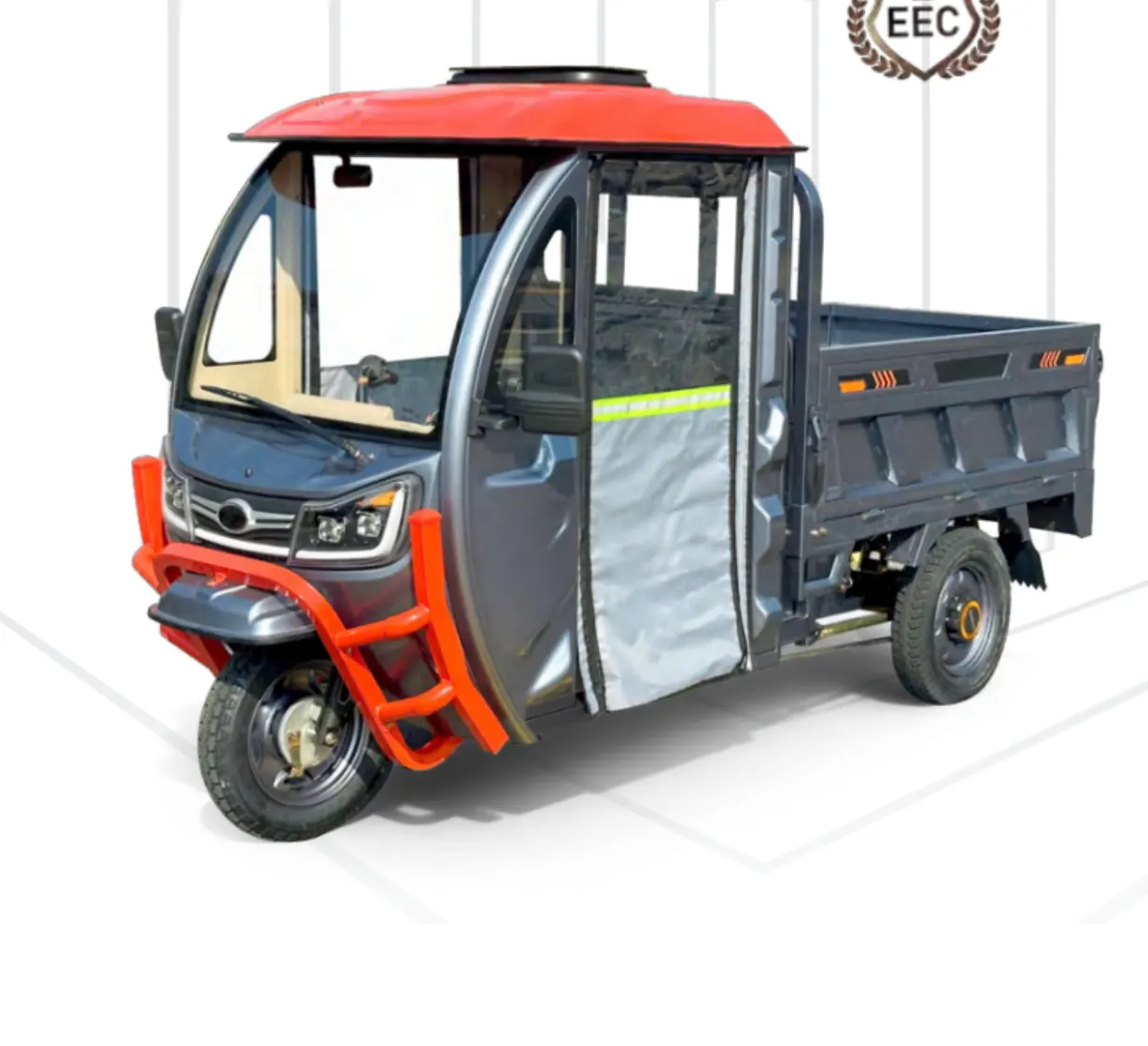
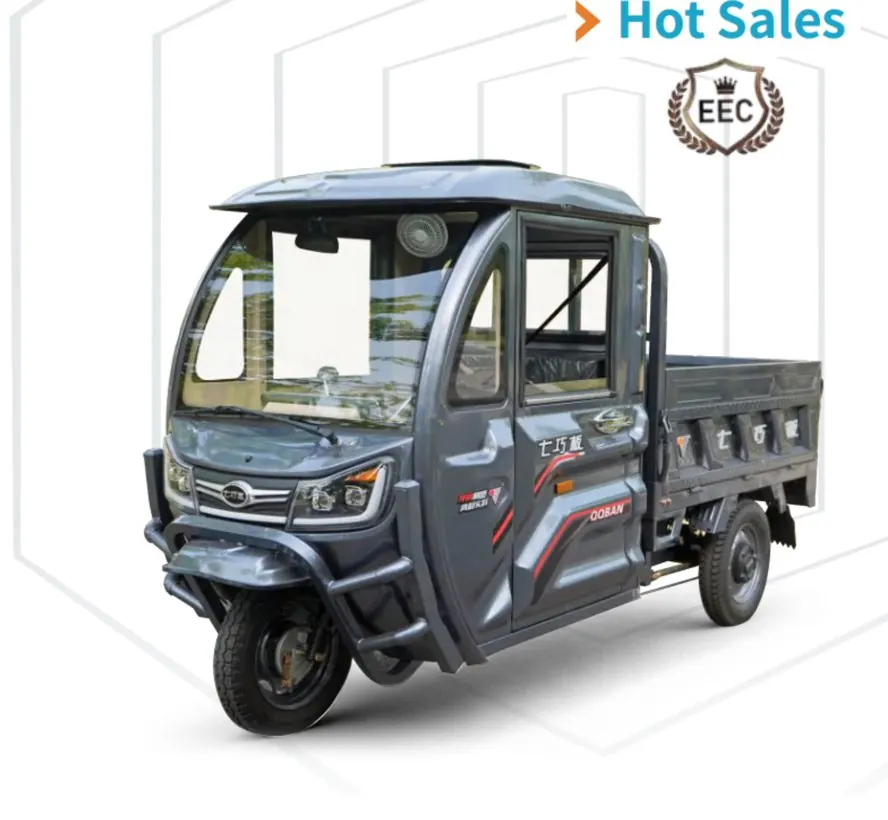
For daily route service, the priority is a balanced vehicle that carries the expected load without making charging and maintenance difficult. For dealers and fleet buyers, the stronger use case is often a repeatable specification: one battery system, one set of common service parts and clear documentation for mechanics.
Blog Articles / Reviews
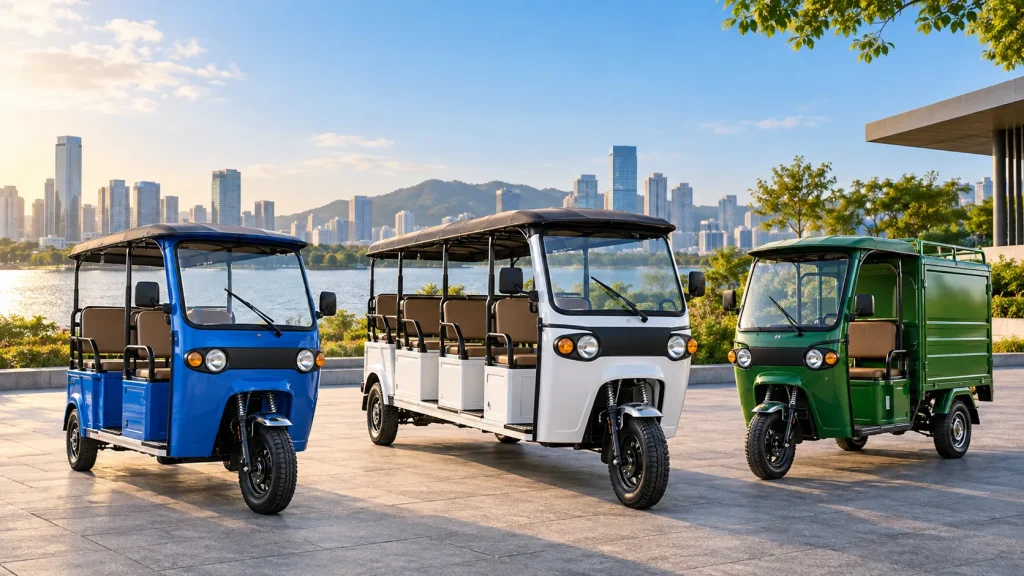
What Is the Price of an E-Rickshaw? Key Cost Factors
There is no single fixed price for an e-rickshaw because the term covers vehicles with different passenger capacities, loading requirements, batteries, voltage platforms, motors, bodies and operating roles. A quotation for a compact local passenger vehicle cannot be compared directly with a higher-capacity passenger model simply because both are described as electric rickshaws. For B2B […]
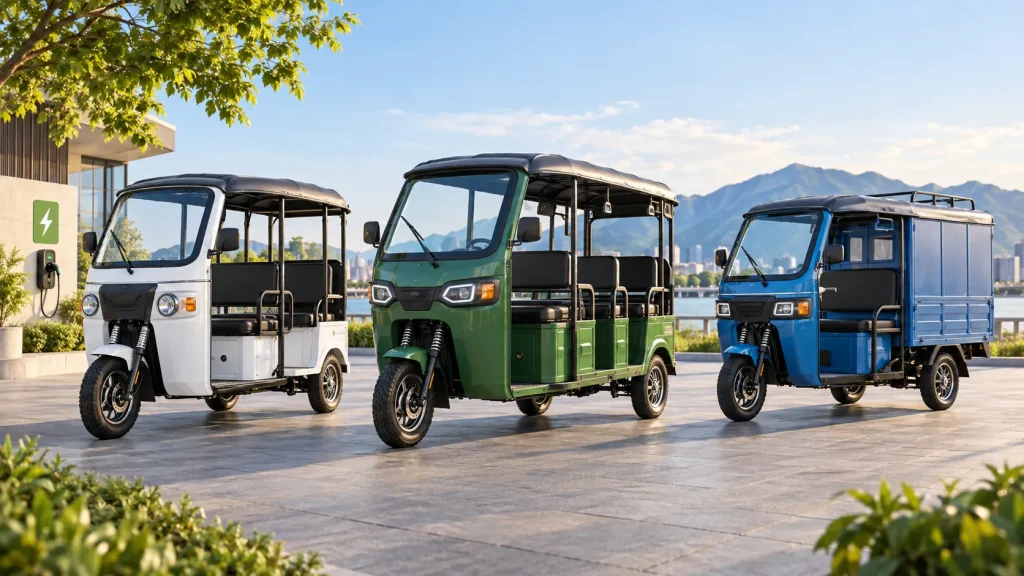
What Is an E-Rickshaw? Types, Uses and Key Components
An e-rickshaw is a battery-powered three-wheeled vehicle designed mainly for short-distance passenger transport, although some configurations combine passenger seating with cargo or utility functions. Depending on the market, similar vehicles may also be described as electric rickshaws, electric tuk-tuks or passenger electric tricycles. The name alone, however, does not define the vehicle specification. Passenger capacity, […]
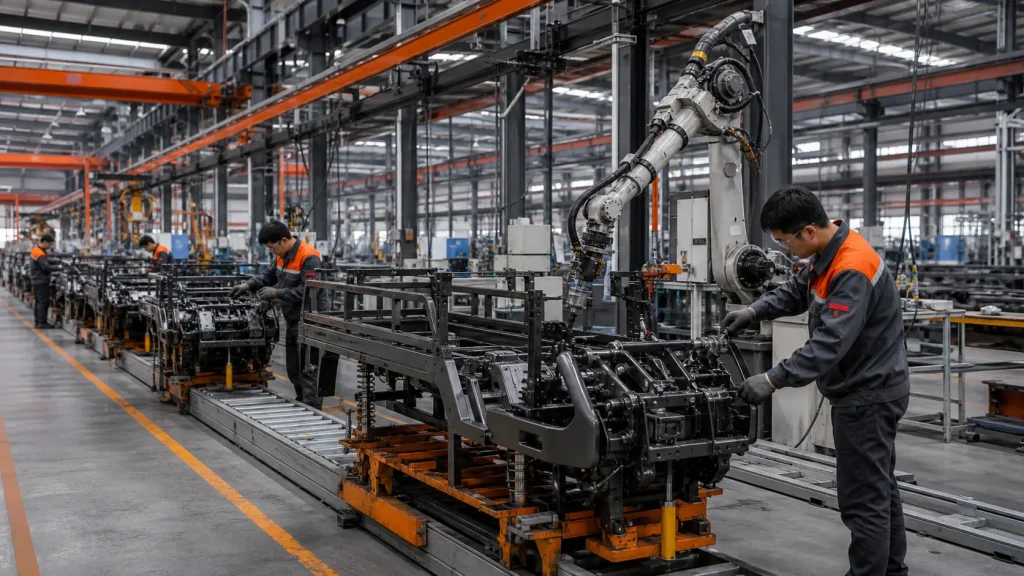
From rear axle systems to export parts supply: LVHANG company milestones
How LVHANG developed from rear axle system production into parts-led export supply and complete vehicle support.
Frequently Asked Questions
Is this type of e-rickshaw suitable for passenger routes or goods delivery?
The right configuration depends on the duty cycle. Passenger work calls for suitable seating, comfort and predictable charging, while goods delivery requires an appropriate load platform, frame and rear axle; ask the supplier to confirm which configuration matches your route, load and road conditions.
Should I buy a complete vehicle or source parts separately?
A complete vehicle is simpler when you need a matched motor, controller, battery, charger, frame and axle system. Sourcing parts separately can make sense for repairs, local assembly or fleet standardisation, but only if dimensions, voltage, wiring and mounting points are compatible.
Does a larger battery automatically give better operating performance?
No. Usable range and reliability also depend on motor and controller matching, vehicle load, terrain, stop-start use, tyre condition and charging practice. Ask for a configuration recommendation based on daily distance and operating conditions rather than choosing by battery size alone.
What should I send when asking about a replacement rear axle or other part?
Provide clear photos, part dimensions, mounting-hole details, axle type, brake arrangement and the vehicle's voltage or model information if available. These details help the supplier check fitment instead of quoting a visually similar part that may not work with the existing frame or drivetrain.
Which service and spare-part details should a dealer confirm before ordering?
Ask which wear parts are available, how replacement components are identified, and whether service documentation is supplied for the proposed configuration. Also confirm packaging, export terms and the process for handling compatibility questions before placing a repeat or fleet order.
Leave Your Message
Please share the intended use, passenger or cargo load, and preferred battery or voltage system. If you need parts, include photos and key dimensions so compatibility can be checked.