CBU, SKD or CKD? How to Choose the Right Shipping Format When You Import Electric Tricycles
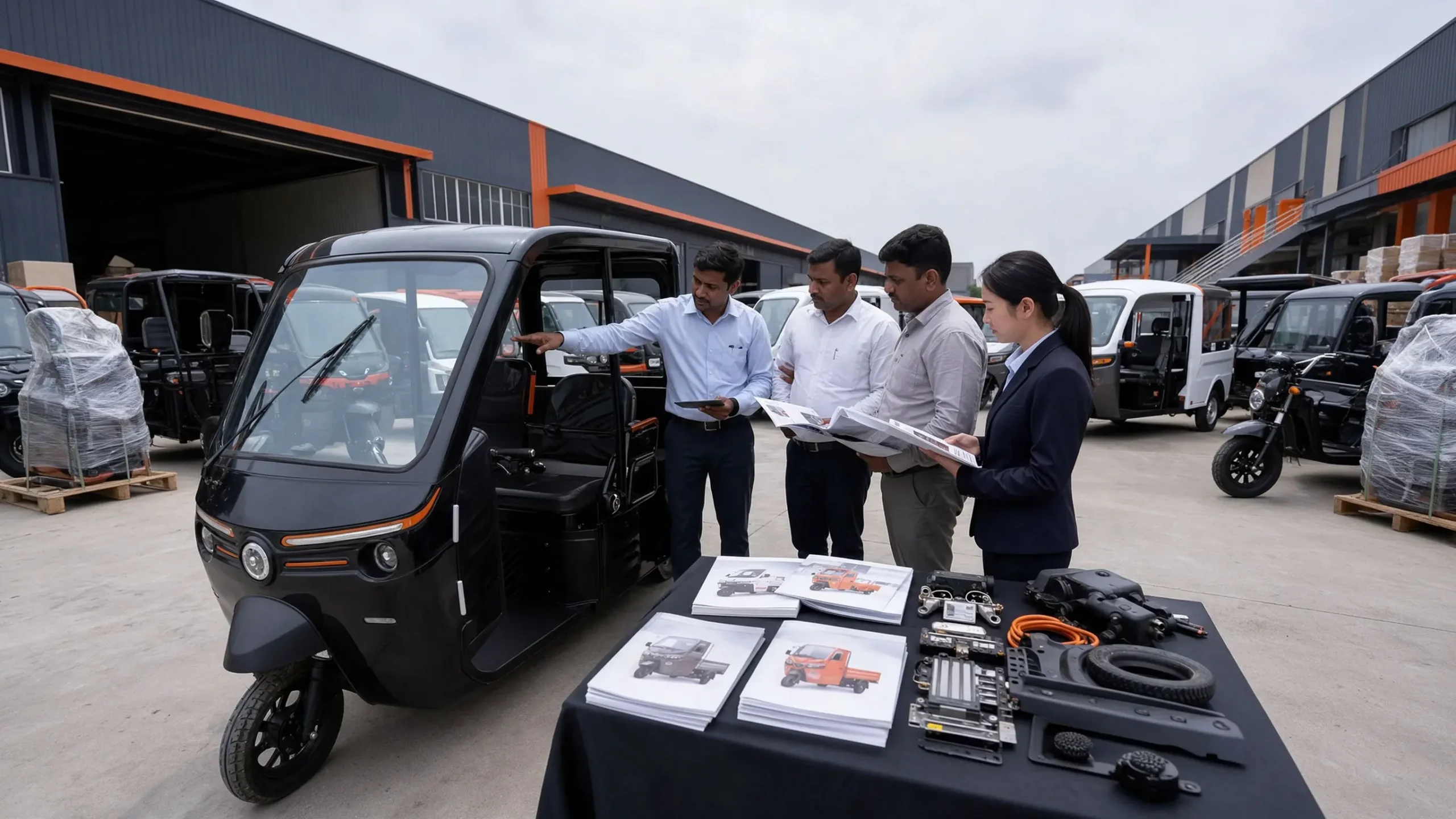
Here is a decision that costs many new importers real money before they even realise it. The vehicle is the same, the factory is the same, and the specification is the same — but the way that electric tricycle is packed into the container changes the import duty, the volume per container, the local assembly work and the spare-parts strategy. Choose the wrong format and you either overpay on customs or end up with a yard full of parts nobody is trained to bolt together.
ECOGO ships cargo and passenger electric tricycles in three formats: CBU, SKD and CKD. This guide explains who each one is actually for, so you can walk into the quotation with the right answer instead of taking the factory’s default.
The three formats in plain language
– CBU (Completely Built Unit) — the finished, ride-away electric tricycle. It arrives assembled, tested and ready to sell or put on the road. What you gain in convenience you pay for in container space and, in many markets, in higher import duty on finished vehicles.
– SKD (Semi Knocked Down) — the vehicle is partly dismantled. Chassis, body panels, cargo box, wheels and major assemblies are packed together, usually with some sub-assemblies still built. A modest local workshop can put an SKD electric tricycle for distributors back together with basic tools and a short training session.
– CKD (Completely Knocked Down) — the fullest level of disassembly. Frames, axles, drivetrain, body panels and electrical components are packed in grouped cartons and kits, and the vehicle is assembled locally. A CKD electric tricycle export program maximises units per container and often qualifies for lower duties designed to encourage local assembly — but it requires real assembly capability and a reliable flow of matching parts.
The same logic applies whether the vehicle is a cargo hauler or an electric passenger tricycle tuk tuk. Body size and seat count change the packing math; the format decision does not.
When CBU is the correct choice
CBU suits importers who want speed and simplicity. You are testing a market, placing a smaller first order, or selling to customers who expect a finished unit with no local assembly line. Dealers buying for resale, fleet operators who need vehicles working immediately, and buyers in markets with low finished-vehicle tariffs are usually best served by CBU.
The trade-off is density. A fully built tricycle, with its cargo box and handlebars, occupies far more container volume than a disassembled one. For small orders and fast launches that is money well spent. For large, repeat programs it usually is not.
When SKD hits the sweet spot
SKD is where many serious distributors land. It cuts wasted container volume without demanding a full factory. The vehicle arrives in a small number of logical groups, assembly is measured in hours rather than days, and the importer can brand, inspect and pre-delivery-check units before sale.
Distributors who run a service workshop, who want to add local assembly jobs, or who face a duty system that rewards partial assembly, consistently favour SKD. It also dovetails with parts: the team doing the assembly learns the vehicle’s systems and naturally becomes the place that can later repair them.
When CKD is worth the commitment
CKD is a program, not a first order. It is the right move when you have assembly space, trained staff, a predictable sales volume and a market that taxes knocked-down kits far below finished vehicles. Some markets deliberately design their tariff schedules this way to build local industry, which is exactly why CKD electric tricycle export has grown alongside the spread of three-wheeled EVs across South Asia, Africa, the Middle East and Latin America.
ECOGO’s longest experience runs through this kind of market — the company has served the Indian electric tricycle market for more than ten years and now covers over 30 countries, with more than 2,000 enterprise customers. CKD works in those markets because the importer is not left alone after delivery: cartons are grouped by assembly system, packing lists are explicit, and the factory can support remote training on parts recognition and assembly.
The questions that decide your format
Before you ask for a CBU or knocked-down price, answer these honestly:
1. What does your tariff schedule actually charge? Compare finished-vehicle duty against parts and kit duty. In some markets the gap is large enough to fund a local assembly operation on its own.
2. Where will assembly happen? SKD needs a clean workshop and a few technicians; CKD needs more space, jigs, and a controlled inventory of parts.
3. How many units per month will you actually move? CKD economics depend on volume. A handful of units a month rarely justifies the setup.
4. How will you organise spare parts? This is where knocked-down formats quietly pay off. The same parts supplier that kits your shipment becomes the source for replenishment, so the assembly line and the service counter share one supply chain.
5. Which documents and certifications does the market require? ECOGO supports E-MARK, DOT and BIS documentation by model and market, which has to be aligned with the chosen format before booking.
Why the parts supplier matters more than the sticker price
When you import electric tricycles from China on a CBU basis, the manufacturer is a vehicle vendor. On a CKD basis, they are effectively your assembly partner — and that raises the bar. A knocked-down program only runs if kits are complete, carton lists are accurate, and every replacement component is available two years later.
That is the advantage of working with an electric tricycle parts supplier China that is also a builder rather than a trading desk. ECOGO began as an electric tricycle rear axle manufacturer in 2010 and still treats parts as its core business: 92 selected parts across seven systems, from integrated and split rear axles and differential gearboxes to controllers from 500 W to 3,000 W, square-shell and square-wave motors, brake and suspension components, lighting and cabin electrical parts. One order can cover finished vehicles, the kits to assemble them, and a replenishment plan sized to local failure rates.
An electric tricycle parts catalogue is available for buyers who want to plan assembly and service stock before the first shipment, and packing can be specified with branded cartons and labels for private-label programs.
A practical starting point
If you are new to a market, the sensible path is usually a smaller CBU or SKD pilot to confirm the model and specification, then a move to SKD or CKD once volume, tariff treatment and assembly capacity are proven. That staged approach is exactly what the ECOGO export team recommends — vehicles first to validate demand, parts and packing planned alongside them, and the knocked-down format scaled only when the local operation is ready.
Tell the export team your destination market, planned monthly volume, available assembly space and target duty treatment, and they will recommend a CBU, SKD or CKD structure with a matching parts list. Request the format comparison and parts catalogue at ecogoev.com, or message WhatsApp +86 198 5169 9562.